A new political fight over AI, wealth and public ownership has drawn Elon Musk and Sen. Bernie Sanders into the spotlight. In June, Sanders introduced the American AI Sovereign Wealth Fund Act, proposing a one-time tax equal to 50% of the equity of qualifying large AI companies. The shares would go into a government-managed fund that Sanders’ office estimates could eventually be worth about $7 trillion.
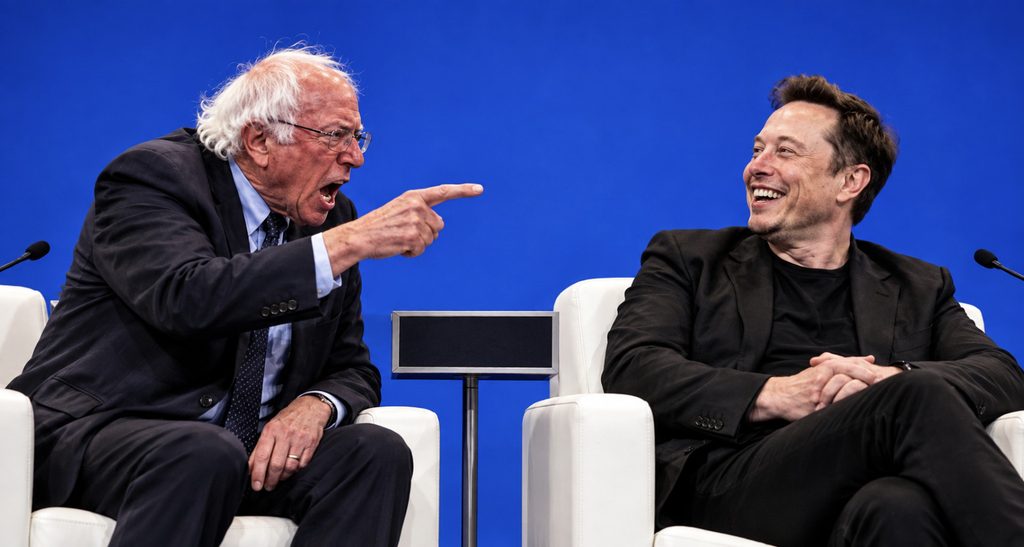
The proposal would apply to companies reaching at least $200 million in annual AI-related revenue. Sanders says the goal is to give Americans a direct stake in the wealth created by AI, with the fund potentially distributing 5% of its value annually for payments and spending on areas such as health care, education and housing.
Musk pushed back on the argument that his enormous fortune represents a giant pile of cash. “I have stock in SpaceX and Tesla, not some big pile of cash,” he wrote on X, arguing that shareholders—including retirement programs—benefit when his companies become more valuable. Meanwhile, SpaceX completed its IPO in June at $135 per share, raising approximately $85.7 billion.
Then came another twist: SpaceX joined the Nasdaq-100 on July 7. The index is tracked by more than 200 investment products with over $800 billion in assets, meaning some funds—including certain retirement investments—may now hold SpaceX indirectly. But not every retirement account does. 👀 Investors need to check their specific funds and benchmarks to know whether they have exposure.