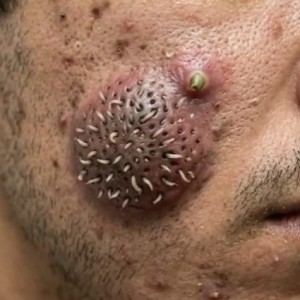
A disturbing image circulating online shows a dark, hard, cone-shaped growth protruding from the skin behind a person’s ear, while gloved hands prepare to examine or remove it. One possible explanation is a cutaneous horn, also known as cornu cutaneum. This unusual growth consists of tightly packed keratin, the protein found in skin, hair, and nails. It can range from a few millimeters to several centimeters long.
Although the appearance can be alarming, a cutaneous horn is not automatically cancerous. It may develop over a benign wart or seborrheic keratosis, but it can also form over precancerous conditions or squamous cell carcinoma, a type of skin cancer. A 2025 medical review reported that approximately 16–20% of cutaneous horns are associated with an underlying malignancy.
These growths commonly appear on sun-exposed areas, including the face, scalp, and ears. They may be painless, but pain, rapid growth, redness, or a firm, thickened base can raise concern. However, appearance alone cannot reliably determine whether a growth is dangerous.
How are they treated? 🩺 A dermatologist may remove the growth and send the tissue for a biopsy, carefully examining its base under a microscope. This is essential to identify the underlying condition and decide whether additional treatment is necessary. Anyone noticing a similar growth should seek medical evaluation rather than attempting to remove it at home.