A British couple from Chesterfield, Derbyshire, faced an unexpected disagreement when they tried to register their newborn son’s name. Dan and Mandy Sheldon had chosen Lucifer, but they claim the registrar questioned their decision and warned that the unusual name could create difficulties for their child later in life, including at school or when looking for work.
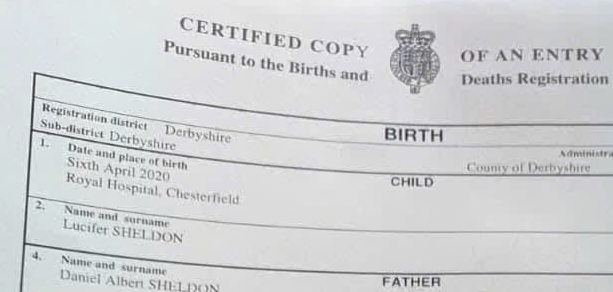
Dan said the experience was far from the joyful moment they had expected. He explained that the choice was not intended to be religious or provocative. Instead, he pointed to the name’s Latin origins, where Lucifer is associated with “light-bringer” or “morning star.” According to the couple, the registrar suggested they consider another legal name while continuing to use Lucifer at home.
The parents said they were asked to wait while the official checked whether the name could be accepted. Eventually, their son’s birth was registered with the name they had chosen. Local officials later apologized if the interaction had caused offense, explaining that registrars may offer guidance when parents select names with strong cultural or historical associations.
The story, originally reported in July 2020, reignited debate about parental freedom and baby-naming rules. While the UK generally allows a wide range of names, some countries have stricter restrictions. New Zealand, for example, has rejected certain names, including Lucifer. For the Sheldons, the important thing was having their choice respected. Should parents be free to give their children any name they like, or should some names be restricted to protect the child from possible difficulties?