Members of the Awá Indigenous tribe in Brazil recently made a rare appearance near an outpost in the northeastern state of Maranhão, approaching government workers to seek food. The group accepted the supplies before returning to their homes deep inside the rainforest. Although the encounter may have seemed ordinary, it drew attention to a growing danger facing their community: the forest they depend on is rapidly disappearing.
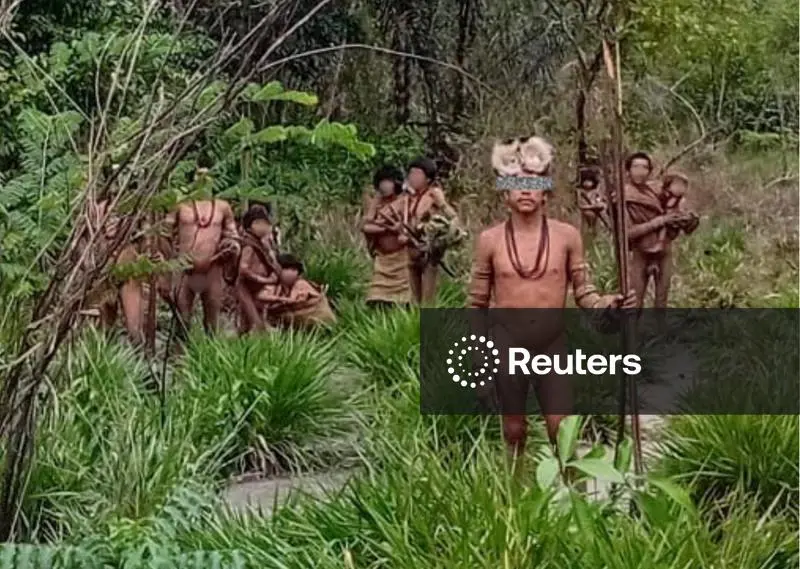
For generations, the Awá have lived largely isolated from the outside world, relying on hunting and gathering to survive. They use bows and arrows to hunt animals such as armadillos and gather natural foods like honey and nuts. But their traditional territory is increasingly threatened by illegal logging, cattle ranching, hunting, fires, and land encroachment. According to Indigenous rights organization Survival International, these pressures are leaving uncontacted Awá groups surrounded by growing destruction and with less forest in which to live.
The Guajajara people, also known as the Forest Guardians, have worked to protect the Awá and their territory, sometimes putting their own lives at risk. They warn that deforestation, climate change, fires, and outside activity are directly affecting the forest and the Awá’s traditional way of life. Activists say the recent encounter is a reminder that even communities living far from modern society cannot remain safe when their land is invaded.
The situation is about much more than protecting a remote forest. For the Awá, the rainforest provides food, shelter, safety, and the foundation of their culture. Indigenous advocates are calling for stronger protection and immediate action from authorities to prevent further destruction. Their message is clear: protecting the Awá means protecting the forest they have called home for generations. 🌎