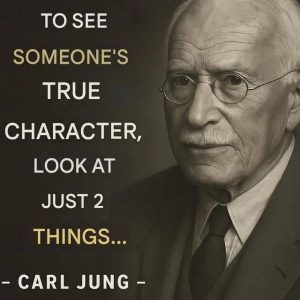
Carl Jung’s work in analytical psychology strongly suggests that a person’s true character is revealed when their social masks fall away. In Jungian philosophy, individuals often present a “persona”—a social mask shaped by expectations, roles, and how they want to be seen by others. However, Jung believed that deeper truths about personality emerge when this mask is challenged or removed.
One key way to understand someone, according to Jungian ideas, is by observing their “shadow” in moments of conflict. The shadow represents the unconscious parts of the psyche that people often reject or deny in themselves. Jung suggested that the traits we criticize most strongly in others can sometimes reflect disowned aspects of our own personality, projected outward. Paying attention to what someone repeatedly judges or reacts strongly against may therefore reveal hidden parts of their inner world.
Another important indicator is how a person behaves under pressure. When stress, frustration, or adversity disrupts the carefully constructed persona, underlying traits often become more visible. This can appear in how they treat others when they feel challenged, powerless, or emotionally overwhelmed. Jungian psychology suggests that these unguarded moments can offer a clearer view of authentic character than socially controlled behavior.
Together, these perspectives emphasize that true understanding of a person goes beyond first impressions and polite interactions. Instead, it requires observing patterns of reaction, projection, and behavior when the mask of social identity begins to slip.