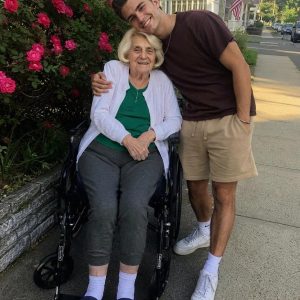
Every person inherits half their DNA from each parent, meaning grandparents typically share about 25% with their grandchildren. But the maternal grandmother’s connection has a unique twist. Women carry two X chromosomes. Men carry one X and one Y. A maternal grandmother passes 25% of her X chromosome to both grandsons and granddaughters. A paternal grandmother passes an X only to granddaughters—not to grandsons at all. This genetic distinction may help explain why maternal grandmothers often form especially close bonds.
Science offers another clue called the Grandmother Hypothesis. It suggests that post-menopausal women help ensure the survival of their grandchildren, contributing to future generations. Anthropologist Leslie Knapp studied birth and death records from seven major populations dating back to the 17th century. Her research found that a maternal grandmother’s presence directly impacted a child’s survival rate. The more DNA a child shares with their grandmother, the more likely she is to provide care and support.
In simple terms, a maternal grandmother shares a stronger genetic bond. Just as a mother prioritizes her own child over a distant relative, a grandmother may feel a deeper instinct to nurture and protect when more DNA is shared. This isn’t cold calculation—it’s evolution quietly working in the background of family life.
But here’s the truth that matters most. While genetics are fascinating, love transcends biology. Regardless of DNA, grandparents play an irreplaceable role in a child’s life. They offer wisdom, stability, and unconditional love. Science can explain the bond, but it can’t measure the warmth of a grandmother’s hug. Some gifts simply don’t need a genetic excuse.