A Florida traffic stop sparked nationwide debate after 23-year-old Dillon Shane Webb was arrested over a bumper sticker on his pickup truck. The decal, displayed in large letters on the rear window, contained a vulgar phrase that a sheriff’s deputy described as offensive. The officer argued that children could see the message and questioned whether it was appropriate to display in public.
According to reports, the deputy asked Webb to remove part of the decal to make the wording less explicit. Webb refused, insisting that what was written on his vehicle was protected by his constitutional right to free speech. The disagreement escalated, and he was arrested on charges that included resisting arrest and obscenity.
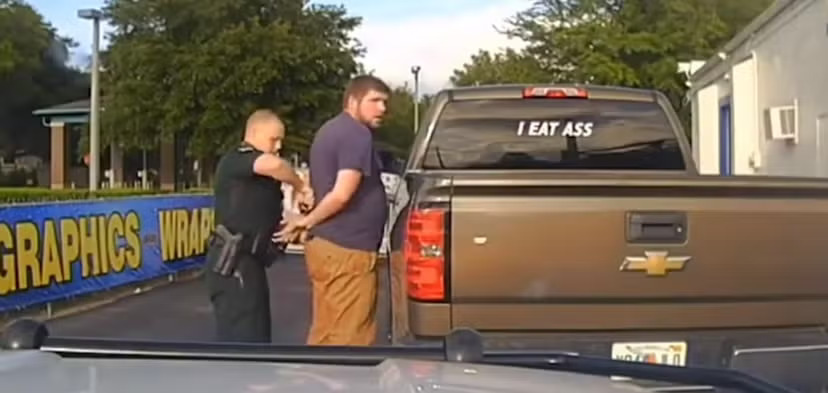
Webb’s attorney argued that his client had every right to display the sticker under the First Amendment and praised him for standing by his beliefs. The case quickly gained attention, with many people debating where the line should be drawn between offensive language and protected speech in public spaces.
Just days later, prosecutors dropped all charges against Webb. Assistant State Attorney John Foster Durrett stated that Webb had a valid constitutional defense under the First Amendment, bringing the case to a close. The incident has since remained a widely discussed example of the ongoing debate over free speech and its limits in the United States.