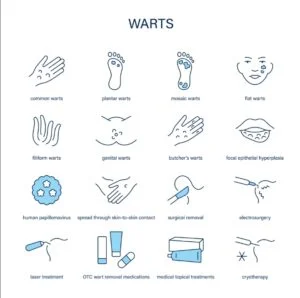
Filiform warts are unusual-looking skin growths caused by human papillomavirus (HPV). They are usually benign and get their name from their distinctive long, thin, thread-like or finger-shaped projections. Unlike common or flat warts, they often appear around delicate areas such as the face, eyelids, lips and neck, although similar growths can occur elsewhere.
These warts develop when HPV enters the skin through tiny cuts, scratches or breaks in the skin barrier. The virus can spread through direct skin contact or by sharing personal items such as towels, razors or socks. People with weakened or developing immune systems may also be more susceptible to viral wart infections.
Filiform warts can appear as clusters of flesh-colored or yellowish projections. They are often painless when located on the face or neck, but growths on the bottom of the foot may become uncomfortable or painful because of pressure while walking. Their raised shape can also cause irritation, snagging or bleeding if they are rubbed or picked.
Although they can look alarming, filiform warts are treatable. Doctors may use treatments such as cryotherapy with liquid nitrogen, electrosurgery and curettage, excision, or certain prescription topical medications. It is important not to cut, pull or clip a suspected wart yourself, as this can cause bleeding, scarring or spread the infection. If you notice an unusual skin growth, a dermatologist or other qualified medical professional can confirm what it is and recommend an appropriate treatment.